J. Kim Penberthy, Ph.D. (Ph.D.’98) pursues innovative therapies to expand patient freedom
Jan. 30, 2026
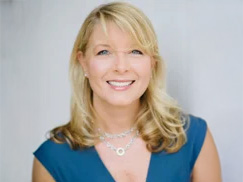
Kim Penberthy, Ph.D. (Ph.D.’98), is a clinician, a researcher, and an educator who serves as the Chester F. Carlson Professorship Chair in Psychiatry and Neurobehavioral Sciences at the University of Virginia School of Medicine. Her work centers around innovative therapies, which can include meditation or psychedelic sessions, to increase mindfulness and self compassion in patients and to reduce suffering.
Her passion to ethically work on the cutting edge has roots in her doctoral studies. She originally chose VCU because of the clinical trials that James McCollough, Ph.D., professor emeritus, was beginning at the time, which would shape how therapists approached clinical depression in patients. Her research, advised by McCollough, laid the foundation for her career path.
What drew you to VCU to pursue your doctorate in clinical psychology?
I had completed my master's degree in experimental psychology at Wake Forest University with a concentration on learning theory and really wanted to work with a clinical psychologist who was developing therapeutic techniques built upon learning theory. I discovered that James McCulllough, Ph.D., was developing his Cognitive Behavioral Analysis System of Psychotherapy (CBASP) and starting large clinical trials. This was a huge draw for me and meeting Dr. McCullough was a game changer for me. He was a researcher and a clinician, and was really making a difference in people's lives with his innovative and effective therapy approaches, including CBASP.
The work I did with him helped launch my research and clinical career and I am forever grateful for his mentorship and guidance. Dr. McCullough was my primary advisor and we still collaborate.
How did the curriculum in VCU’s Department of Psychology prepare you for your professional work? Which lessons from those experiences do you still use?
The VCU clinical psychology curriculum was so strong and I felt that I received an amazingly comprehensive yet deep education. I feel fortunate to have been able to learn from some of the legends in the field including Don Kiesler, Ph.D., regarding interpersonal psychotherapy, Dr. McCullough with CBASP, and Everett Worthington, Ph.D., about forgiveness. I still collaborate with these individuals, including Jim and Ev and use what they taught me in clinical and research work every day.
Tell me about your current role as the Chester F. Carlson Professorship Chair in Psychiatry & Neurobehavioral Sciences at the UVA School of Medicine. What does your day-to-day look like?
In this role, I sit at the intersection of clinical care, research, and education — especially in the areas of mindfulness, clinician wellness, and now psychedelic-assisted therapies.
I still see patients regularly, including in psychiatry, wellness clinics, and the cancer center. This anchors everything else I do. I work with individuals facing depression, anxiety, trauma, grief, serious medical illness, and sometimes very unusual or “extraordinary” experiences. Those clinical encounters remind me every day why the science and the systems work matter.
A growing part of my day is devoted to building and leading research initiatives, particularly around contemplative practices and psychedelic-assisted therapies for conditions like prolonged grief disorder. That means meeting with collaborators, shaping study designs, writing grants, reviewing data, and thinking about how to do this work in a way that is ethically sound, culturally sensitive, and clinically responsible.
I’m also involved in leadership and collaborative work across UVA — helping integrate contemplative science, clinician wellness efforts, and emerging psychedelic research into a larger vision of whole-person care. So, on any given day, I may move from a therapy session, to a meeting about a psilocybin trial, to a discussion about how to support clinicians’ wellbeing within our health system.
What are the challenges and rewards of balancing research, teaching, and clinical work?
The main challenge is that each domain — clinical work, research, and teaching — demands a different kind of presence. Clinical work requires emotional availability and deep listening; research demands sustained concentration, precision, and long-range thinking; and teaching and mentoring draw on clarity, communication, and patience.
Switching among those modes in a single day can be taxing. There are also practical challenges: finite time, overflowing email, and an academic culture that tends to reward “yes” a bit more than is healthy. I have to be deliberate about what I take on and where I can genuinely be of service.
The rewards, however, are substantial. My clinical work feeds my research questions — for example, noticing the profound stuckness and yearning in prolonged grief helped shape our psilocybin study. The research, in turn, gives me new tools and perspectives I can bring back to patients, whether that’s through mindfulness-based approaches, self-compassion practices, or emerging psychedelic interventions. And while I do still teach and supervise, I now think of that more as an extension of the clinical and research mission, rather than the central focus.
When all three are in balance, it feels like a coherent vocation rather than a collection of jobs. That coherence is very satisfying.
Your research has focused on “the effects and impact of mindfulness and meditation practices on health and wellbeing as well as human performance and extraordinary experiences.” What interested you in this area of research? Is there something in particular that you discovered that surprised or excited you during research?
I’ve long been fascinated by how people find meaning and resilience in the face of profound suffering, and by the role of altered or expanded states of consciousness in that process.
On one side, that led me into mindfulness and meditation, because I saw firsthand how these practices helped patients live more skillfully with pain, illness, anxiety, and loss. Mindfulness and self-compassion can fundamentally shift people’s relationship to their thoughts and emotions, allowing them to move from “I am my suffering” to “I am noticing my suffering, and I can still choose how to respond.”
On the other side, my work at the Division of Perceptual Studies drew me into studying extraordinary experiences: near-death experiences, after-death communications, and other non-ordinary states. Many people have these experiences quietly and feel afraid to talk about them in clinical settings. One of the most striking findings is how often these experiences are associated with lasting positive changes in values, worldview, and reduced fear of death.
The newer, very exciting development is bringing these threads together through psychedelic-assisted therapies, such as psilocybin for prolonged grief disorder. Psychedelics can reliably induce powerful altered states — sometimes mystical-type experiences — that intersect with what we’ve seen in contemplative practice and extraordinary experiences research. What surprises and inspires me is how, when done with careful screening, preparation, and integration, these experiences can help people move through long-standing stuckness in grief, reconnect with meaning, and experience profound shifts in perspective.
To me, this work opens a bridge between neuroscience, psychology, spirituality, and lived human experience. It’s both scientifically rich and deeply human.
What’s your why?
My “why” is to reduce suffering and expand freedom — psychological, emotional, and spiritual — for as many people as I can, in ways that are both evidence-based and deeply humane.
I’m driven by a few core convictions: That people are often far more resilient and capable of transformation than they believe. That states of expanded awareness — whether through meditation, spontaneous extraordinary experiences, or carefully supported psychedelic sessions — can sometimes catalyze powerful healing and reorientation. That it’s possible to bring rigorous science and genuine compassion to the same table, without sacrificing either.
I also feel a responsibility to help ensure that as psychedelics and contemplative practices become more visible and popular, they are used wisely — grounded in ethics, cultural humility, and clinical integrity. My “why” is not just to explore what is possible, but to safeguard how we do it.
At the end of the day, what keeps me going are the individual stories: the patient who finds a little more peace with their illness, the person whose grief softens just enough to let life back in, the individual who is no longer afraid to talk about a meaningful experience they’ve carried in silence for years. If my work helps create conditions for those kinds of shifts, then it feels like time well spent.